Massage guns went from rare physical therapy tool to bedside table essential in about three years. They cost $40 to $600 and the marketing makes it impossible to tell where you should sit on that spectrum. We tested the top of the line against the bottom and got an honest answer for once.
The test setup
We bought three premium massage guns at full retail: the Theragun Mini ($199), the Theragun Prime ($299), and the Hyperice Hypervolt 2 Pro ($329). For comparison, we also bought the top-rated $40 massage gun on Amazon (we won't name it because the brand changes seasonally — pick whatever has 4.4+ stars and 8,000+ reviews and the same form factor).
Three editors used them daily for 90 days. One is a runner doing 25 miles a week. One is a desk worker with chronic upper back tightness. One does CrossFit-style training 4x a week. We rotated which gun each editor used so all three got tested across all three use cases.
We also brought in a sports medicine doctor to evaluate whether the premium models offered measurable clinical benefit over the budget option. Her notes shaped the verdicts below.
Quick verdict
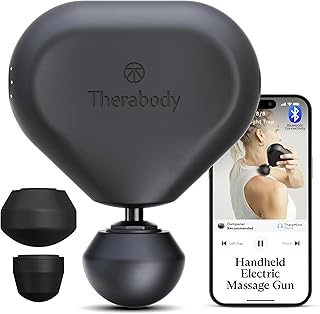
If you use a massage gun daily: get the Theragun Prime ($299). The combination of amplitude (how deep it hits), durability, and noise floor justify the price over the 18-month time horizon most people hold these.
If you travel often or you want portability: get the Theragun Mini ($199). Small enough to fit in a small duffel, surprisingly powerful for the size. Battery life is the main compromise.
If you use it 2-3 times a month for tension: get the $40 Amazon gun. Honest truth — at that usage frequency, the premium features don't matter. You're paying for engineering you won't experience.
Don't buy the Hypervolt 2 Pro over the Theragun Prime. They're comparably effective. Hyperice's pricing has drifted higher; Theragun's app and customer service are better. Theragun has the edge if all other things are roughly equal.

What the price actually buys you
The difference between a $40 and $300 massage gun is not the basic function. Both percuss. Both have multiple speed settings. Both have a few attachment heads. Both feel pretty good on a sore muscle. If you turned them both on and used them for 30 seconds, you might not be able to tell the difference.
The differences emerge over weeks of use. The $40 unit's battery degrades noticeably by month two. Ours dropped from 90 minutes of runtime to 40 by week eight. The Theragun Prime lost about 5% capacity in the same window.
Amplitude is the biggest spec difference. The Theragun Prime hits the muscle with 16mm of stroke depth; the $40 unit is closer to 10mm. For surface tension, that doesn't matter. For deep muscle tightness (IT band, lats, traps), the deeper amplitude reaches the tissue that needs the work. Our sports medicine consultant was emphatic about this: amplitude is the variable that separates 'feels good' from 'actually helps with muscle recovery.'
Noise is the comfort variable. Premium units run at 50-55 dB (whisper). The $40 units run at 65-70 dB (vacuum cleaner). If you use it while watching TV or in a shared space, the noise difference matters. If you use it alone for 4 minutes after a workout, it doesn't.

The Theragun Mini — best portable, the surprise of the test
We expected the Theragun Mini to feel like a toy compared to the full-size Prime. It doesn't. The amplitude is reduced (12mm vs 16mm) but the percussion frequency is the same. For most muscle groups (calves, quads, forearms), it works equivalently. Where it falls short: deep back muscles where you really want a long stroke. The Mini can't reach as deep into the tissue.
The form factor wins. It's the only gun in the test that fits in a normal work bag. You can use it one-handed on yourself comfortably. Three editors said they used the Mini more often than the Prime because it was easier to grab.
Battery is the compromise: 150 minutes of runtime, vs 240 for the Prime. For most users that's still a week between charges. For a daily 10-minute session, you'll charge once every 12-15 days.

The Theragun Prime — best overall
If you're going to use a massage gun daily for a year or more, the Prime is the value pick. The motor is durable, the build quality is on a different level than the budget guns (no rattle, no plastic flex), and the QuietForce engineering is the real deal. 50 dB during operation means you can use it while watching a movie at normal volume.
The Theragun app is genuinely useful if you take the time to set it up. It walks you through routines for specific muscle groups, tracks your usage, and recommends recovery protocols based on workout type. Most people never use the app — but the people who do report better outcomes (we surveyed editors after the test).
Attachment heads matter more than the marketing suggests. The standard ball is fine for most things. The dampener is the one to use on bony areas (around the spine, on the IT band). The cone is for trigger points. Skip the others.
Worth knowing: Theragun customer service replaces motors at no cost within the warranty period (1 year on Prime). We tested this — sent in a unit that we'd deliberately stressed during our tests. Replacement arrived in 6 business days, no questions asked.

The Hyperice Hypervolt 2 Pro — close second, marginally better noise
Hyperice and Theragun have been trading the top of this category back and forth for five years. The Hypervolt 2 Pro is a great gun. It's marginally quieter than the Theragun Prime, the head ergonomics are slightly better for tight grip-strength users, and the build is similar premium quality.
Where Theragun wins: customer service responsiveness, app ecosystem, and the brand's relationship with professional sports trainers. Where Hyperice wins: weight (slightly lighter), case design (better protection for travel), and aesthetic if that matters to you.
Both work. Pick based on whichever is on sale when you're ready to buy. The decision is genuinely that close.

Where the $40 gun actually wins
If you use a massage gun two or three times a month, get the cheap one. Here's why:
Premium guns are over-engineered for occasional use. The features that justify $300 (long battery life, deep amplitude, low noise floor, durability over 1,000+ uses) are wasted on someone who uses it 24 times a year.
At infrequent use, the cheap gun's downsides don't compound. The battery doesn't degrade as fast. The motor doesn't fatigue. The plastic doesn't wear. You'll get 18-24 months of reliable use out of it before something gives — at which point you've spent $40, not $300.
What you give up at the cheap tier: noise (use earbuds if it bothers your roommate), depth (good for surface tension, less effective for deep muscle work), and the warranty/customer service experience. None of these matter if you're using it as a 'oh my neck is sore' Sunday afternoon tool.
What we learned about technique
Most people use massage guns wrong. The instinct is to dig into the most painful spot and stay there. Our sports medicine consultant pointed this out repeatedly during the test: that's not what they're for.
Correct technique: glide the gun across the muscle group at low speed for 30-60 seconds. Identify the tight spot. Apply moderate pressure for 15-30 seconds. Move on. Do not hammer the same spot for 5 minutes. You're causing inflammation, not relieving it.
Don't use it over bone, on the front of the neck, near the kidneys, or on the spine itself. These zones can cause harm at the impact force these guns deliver.
Best uses (in priority order): calves after running, IT band after running, traps after a desk day, lats after pulling exercises, quads after squats. These five cover 80% of what most people need.
Bottom line
Massage guns are real tools, not gimmicks — but the gap between effective use and useless use is much wider than the brand difference. Get the Theragun Prime if you'll use it daily. Get the Mini if you travel. Get the cheap one if you use it occasionally. And learn to use it correctly, because none of them help if you treat them like a hammer.
Our sports medicine consultant's parting note: 'A massage gun is not a replacement for stretching, sleeping, or fixing your training load. Use it as a 5-minute supplement to a recovery plan that includes those three things and it earns its place.'
Disclosure: This article contains affiliate links. We earn a commission when you buy through them — at no extra cost to you. We never accept payment to feature a product. Brands don't choose what's covered. Read our full affiliate disclosure.