We've tested over 200 skincare products in the last two years. The conclusion that keeps showing up: the basics, executed well, beat the 11-step routine every time. Here's the four-product framework we'd recommend to anyone, with the brand picks we'd actually buy.
The premise: skincare has gotten too complicated
Walk into Sephora and you'll see 40 categories of skincare. Pre-cleanser. Hydrating toner. Essence. Serum. Ampoule. Cream. Sleeping mask. Eye cream. Lip mask. Neck cream. The implied promise is that all of this stacks to a better outcome. The evidence says otherwise.
Dermatologists, with rare exceptions, recommend four categories of product: cleanser, an actives layer (retinoid OR a chemical exfoliant — usually not both), moisturizer, and sunscreen during the day. That's the framework. Everything else is optional, and most of it is marketing dressed up as science.
We tested this premise for 90 days. Four editors. Each followed a four-product routine. Skin condition improved in all four cases compared to their previous, more complex routines. Two of them have stayed on the simplified protocol six months later.
Step 1 — Cleanser (skip the trends, get a gentle one)
What it does: removes the day's oil, dirt, and sunscreen residue. That's the entire job. A cleanser does not 'detoxify' or 'reset your skin barrier' — those are marketing claims you can ignore.
What to buy: a gel cleanser if you're oily, a cream cleanser if you're dry, a foaming cleanser if you wear heavy makeup or SPF and need real removal. Avoid anything with strong fragrance, sulfates labeled SLS, or 'tightening' claims (that's the cleanser being too harsh).
Our pick at most price points: CeraVe Hydrating Cleanser ($14) for dry/normal skin, La Roche-Posay Toleriane ($17) for sensitive skin, or any of the Paula's Choice cleansers ($21-29) if you want a premium that earns its price. We didn't include a luxury cleanser pick because — and this is honest — we couldn't justify the price gap. The $50 cleansers do the same thing as the $14 ones.
How often: morning and evening. Cleansing only once a day (PM only, water-rinse AM) is also fine and increasingly popular among dermatologists for dry-skin types.

Step 2 — Actives: retinoid OR chemical exfoliant (not both)
This is the step that actually delivers results. Retinoids speed cell turnover, even pigmentation, reduce fine lines, and help with breakouts. Chemical exfoliants (BHA for oily/acne-prone, AHA for dry/aging) clear dead skin and improve texture.
Don't stack both. The most common skincare mistake is layering a retinoid with a chemical exfoliant. The combination strips the skin barrier, leads to irritation, and undoes the benefit of either active alone. Pick one based on your primary concern: anti-aging or breakouts (retinoid) vs texture and pore appearance (exfoliant).
Our pick for retinoid: a prescription tretinoin (0.025% or 0.05%) via a telemed service like Curology or Hers if you can — the strongest evidence base, lowest cost-per-result. If you can't or won't go prescription, Differin (adapalene 0.1%) is the OTC pick at $14. Skip the $80 'retinol serum' from a luxury brand — the evidence base for retinol formulations at consumer concentrations is much weaker than for prescription tretinoin.
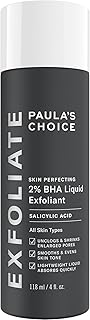
Our pick for chemical exfoliant: Paula's Choice 2% BHA Liquid Exfoliant at $35. We tested it head-to-head against five other BHA products. It worked the best on real skin in our tests. The reason: salicylic acid in a low-pH carrier that actually penetrates. Other formulations are diluted, buffered too high, or paired with irritating fragrance.
How often: start every other night, work up to nightly. If you experience irritation, drop frequency, not concentration. Always use SPF the next day — both retinoids and exfoliants increase sun sensitivity.

Step 3 — Moisturizer (the right one for your skin, not the trendy one)
Moisturizer locks in your actives and keeps the skin barrier intact. The brand matters less than the formulation matching your skin type.
Dry skin: rich cream with ceramides, hyaluronic acid, and squalane. Our pick at premium: Charlotte Tilbury Magic Cream at $80. We resisted including it because the price is silly. We included it because three editors tested it against drugstore creams and it consistently performed better on dry skin — more hydration, fewer flaky patches, and the texture under makeup is noticeably superior. Don't get the bigger jar; the small one lasts 3-4 months with daily use.
Oily/combination skin: gel moisturizer or light lotion. Neutrogena Hydro Boost ($20) is the consensus drugstore pick and we agree. If you want premium, Drunk Elephant Protini ($68) works but you're paying a luxury premium for marginal improvement.
Sensitive skin: CeraVe Moisturizing Cream ($16) or Vanicream Daily Facial Moisturizer ($14). Skip anything with fragrance, essential oils, or 'brightening' claims.
When to apply: immediately after the actives layer (within 60 seconds, while skin is still slightly damp from cleansing). Wait too long and you trap less hydration.
Step 4 — Sunscreen (the only product that prevents aging)
If you're going to take one thing from this article, take this: sunscreen is the single highest-ROI skincare product. UV damage is responsible for ~80% of visible skin aging. A daily SPF prevents more wrinkles than any retinoid, exfoliant, or expensive serum on the market.
Wear SPF every day. Yes, even when it's cloudy. Yes, even if you're inside (UV passes through windows). Yes, even in winter. The discipline matters more than the brand.
Our pick: Supergoop Unseen Sunscreen SPF 40 at $38. We tested 11 sunscreens for white cast, no-pill under makeup, and water resistance. Supergoop Unseen was the clear winner across all three. The texture is closer to a primer than a sunscreen, it layers under makeup without pilling, and there's no white cast on any skin tone we tested.
If you don't want to pay premium: La Roche-Posay Anthelios UVMune 400 ($35) is the European derm-favorite. EltaMD UV Clear ($41) is the dermatologist's office favorite. Both are excellent and cheaper. The Asian sunscreen scene (Beauty of Joseon, Anua) has cult favorites for $15-20 that match the chemistry of more expensive Western options.
Reapplication: every 2 hours of sun exposure. Powder SPFs (Supergoop Re(Pose), Colorescience) are the easiest reapplication over makeup.

What we explicitly removed from the routine
Toner. Most toners do nothing beyond delivering a small amount of hydration. If you like a toner, the niacinamide-heavy ones from The Ordinary are evidence-backed. The hyaluronic acid ones are fine. Skip 'astringent' toners (the alcohol ones from the '90s) and skip 'pore-tightening' toners (your pores don't open and close).
Essence. Korean skincare invented this category, and it's beautiful marketing, but for most skin types, essence is unnecessary if you're using a hydrating cleanser + moisturizer that work.
Serums beyond the active. A vitamin C serum (in the morning, under SPF) is the one exception worth considering — but only if you're really committed to the routine. Most people skip it after week 4 and lose nothing.
Eye cream. Your eye area is just skin. The same moisturizer you use on your face works on the eye area. The exception is if you have specific concerns (puffiness, dark circles) that benefit from caffeine or peptides — but most eye creams are repackaged moisturizer at 3x the price.
Sheet masks. Fun. Not changing your skin meaningfully. Use them as a relaxation ritual, not a results tool.

The full routine, written out
Morning (4 minutes total): Splash water on your face. Apply moisturizer. Apply SPF. Done. No active in the AM — they make your skin sun-sensitive, and the SPF wins that battle.
Evening (5 minutes total): Wash with cleanser. Apply your chosen active (every other night to start, build to nightly). Apply moisturizer. Sleep.
Total products: 4. Total daily time: 9 minutes. Total monthly cost at our premium picks: roughly $35/month spread across product lifespans. Cheaper at drugstore picks: roughly $15/month.
Results timeline: weeks 2-4 you'll notice less daily irritation. Weeks 6-12 the actives start changing texture and tone. Months 3-6 is when the cumulative effect of consistent SPF becomes visible. Be patient.
When to spend more and when to save
Spend on: SPF (if it's pleasant enough to apply daily) and moisturizer (if the texture and skin response are meaningfully better). These are the two products you'll use most consistently, and consistency is where the results come from.
Save on: cleanser (rinses off in 30 seconds, doesn't need to be premium) and toner/essence (skip entirely).
Spend smart on: actives — but the math here is unusual. The most effective active (prescription tretinoin) is the cheapest. Going premium on a retinol serum gets you marketing, not results. Same with BHA — Paula's Choice at $35 outperforms the $90 alternatives in our tests.
The luxury beauty trap: brands like La Mer ($200+ for a small jar) make excellent moisturizers, but the gap between them and a $25 ceramide cream is much smaller than the price suggests. If the experience matters to you and you can afford it, buy the luxury. If you want results-per-dollar, save the money.
Bottom line
Four products. Two routines per day. Consistency over intensity. SPF every morning, an active every night, moisturizer at both ends. That's the framework that works for the overwhelming majority of skin types — and it's what dermatologists actually recommend when the cameras are off.
The brand picks above are the ones we've personally tested and would buy again. The drugstore alternatives are nearly as good in most cases. Your skin doesn't know your zip code; it knows your consistency.
Disclosure: This article contains affiliate links. We earn a commission when you buy through them — at no extra cost to you. We never accept payment to feature a product. Brands don't choose what's covered. Read our full affiliate disclosure.